Why Court Coverage Is Required for Accurate Legal Documents
Court reporting plays a crucial duty in the legal system. It gives an accurate, verbatim document of court procedures. This accuracy is vital for keeping the honesty of legal procedures. Errors in paperwork can cause significant repercussions for situation end results. As attorneys increasingly count on these records, recognizing the subtleties of court coverage becomes essential. What factors add to the effectiveness of this practice in guaranteeing justice?
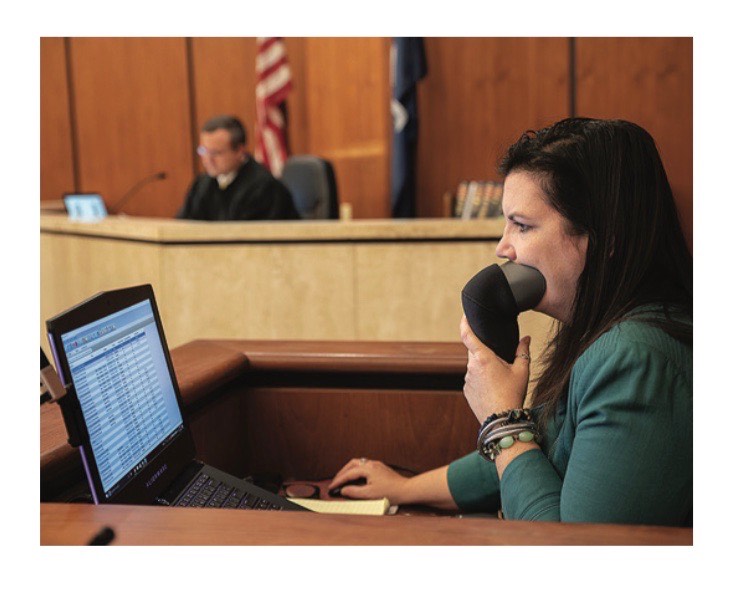
The Role of Court Reporters in the Legal System
Court reporters act as the important link in between spoken testament and composed record in the lawful system. They are accountable for capturing verbatim accounts of court procedures, assuring that every word talked is accurately recorded. This transcription becomes a main record, crucial for charms, legal research study, and maintaining the honesty of judicial processes. Court press reporters utilize customized equipment and strategies, such as stenography, to facilitate this specific paperwork. Their duty prolongs beyond simple transcription; they must recognize legal terms and court procedures to ensure clarity and context in their documents. On top of that, court press reporters preserve privacy and impartiality, adding to the general fairness of the legal procedure. Their work is important for courts, lawyers, and events included in lawsuits, as it supplies a trusted account of process that can be referenced in future legal actions. With their knowledge, court press reporters support the criteria of justice within the lawful system.
Making Sure Precision in Legal Records
Preserving precision in lawful transcripts is extremely important to the honesty of judicial procedures. Stenotype reporter play a crucial role in capturing every talked word during tests, depositions, and other legal setups. Their knowledge in stenography and experience with lawful terminology assurance that records reflect the exact discussion and subtleties of the situation. Any noninclusions or errors can lead to misconceptions, which might negatively impact the outcomes of legal disagreements.
To attain this level of precision, court reporters utilize advanced technology and strenuous training to boost their transcription abilities. They likewise take part in extensive evaluation processes, cross-checking their help precision before completing files. In addition, assuring appropriate context and speaker identification includes one more layer of reliability to the records. Eventually, precise legal records serve as foundational records that maintain the justice system, enabling all events entailed to count on a precise document of proceedings.
The Significance of Real-Time Coverage
Real-time reporting has arised as a considerable advancement in the area of court reporting, boosting the effectiveness and ease of access of lawful procedures. This technology enables stenotype reporter to record spoken discussion instantaneously, giving instant accessibility to transcripts for lawyers, judges, and various other legal workers. With real-time coverage, participants can promptly review statements and disagreements, facilitating more enlightened decision-making during procedures.
This capacity is particularly useful in intricate cases where fast understanding of details is essential - durham court reporting. It promotes clearer interaction amongst all parties, decreasing the probability of misconceptions. Additionally, real-time transcripts can be shared remotely, benefiting those incapable to go to personally, thereby expanding access to justice. As legal atmospheres come to be significantly vibrant, the role of real-time reporting in guaranteeing timely and precise details circulation can not be overemphasized, making it an essential tool in contemporary court reporting methods
Legal Paperwork and Its Effect on Situation Outcomes
Efficient legal documentation plays a crucial duty fit instance results, considering that it functions as the structure upon which legal disagreements are built. Precise records ensure that all important facts, statement, and evidence are clearly provided, permitting legal professionals to build engaging instances. Errors or omissions in documents can result in false impressions, which may detrimentally influence the court's decision.
Efficient paperwork helps with efficient instance management, making it possible for lawyers to promptly reference crucial details during procedures. Juries and courts rely heavily on recorded proof to recognize the context and nuances of an instance. The top quality of legal paperwork straight affects the integrity of arguments offered in court.
Eventually, precise and detailed lawful paperwork not just boosts the possibilities of desirable outcomes however also upholds the integrity of the lawful procedure, assuring that justice is served accurately and relatively.
Developments in Court Coverage Modern Technology

As innovation proceeds to evolve, innovations in court reporting have actually significantly transformed exactly how legal documentation is produced and managed. Innovations such as real-time transcription software permit court press reporters to deliver instant accessibility to transcripts, enhancing the effectiveness of lawful process. Digital taping systems have likewise arised, giving a reputable back-up to traditional approaches, while man-made knowledge is increasingly being incorporated right into the documents procedure, enhancing accuracy and minimizing human error.
In addition, cloud-based systems facilitate secure sharing and storage of court records, guaranteeing that legal teams can access needed data from anywhere. Remote court coverage has come to be commonplace, allowing attorneys to take part in process continue reading this regardless of geographical location. These technological advancements not just simplify the court reporting procedure however likewise enhance the overall honesty of lawful documentation. click here now Consequently, the lawful area is better equipped to fulfill the demands of modern-day litigation, making certain that justice is served efficiently and successfully.
Often Asked Inquiries
What Qualifications Do Court Reporters Normally Need?
Court reporters commonly require a senior high school diploma, specialized training in court coverage, and proficiency in shorthand or voice writing. Qualification and licensure needs vary by state, improving their reputation and guaranteeing specialist standards are satisfied.
Exactly How Do Court Reporters Maintain Privacy?
Court press reporters keep privacy by adhering to strict ethical guidelines, utilizing safe approaches for keeping and transmitting transcripts, and ensuring sensitive information is shared only with authorized people associated with the lawful proceedings.
Can Court Reporters Job in Various Other Settings Besides Courts?
Court reporters can without a doubt operate in various setups past courts, including depositions, company meetings, and legislative settings up. Their skills in recording talked language accurately make them useful in any type of environment calling for accurate paperwork.
What Is the Average Salary of a Court Reporter?
The ordinary wage of a stenotype reporter differs commonly, normally ranging from $50,000 to $100,000 each year, depending on aspects such as experience, location, and the specific market in which they are employed. (durham court reporting)
Exactly how Lengthy Does It Require To Come To Be a Qualified Stenotype Reporter?
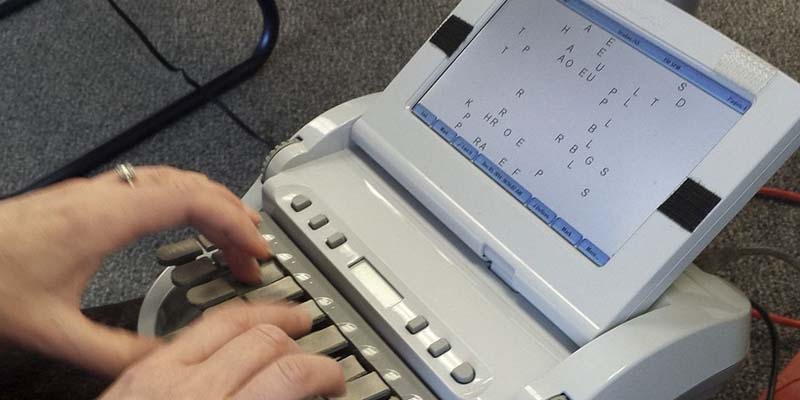
Court reporters offer as click for info the crucial link in between talked testimony and written record in the lawful system. In enhancement, court reporters maintain privacy and impartiality, adding to the overall justness of the legal process. Advancements such as real-time transcription software permit court reporters to supply immediate accessibility to transcripts, enhancing the effectiveness of legal procedures. Court press reporters commonly need a high school diploma, specialized training in court coverage, and proficiency in shorthand or voice writing. Court reporters can undoubtedly function in numerous settings beyond courts, consisting of depositions, business conferences, and legal assemblies.